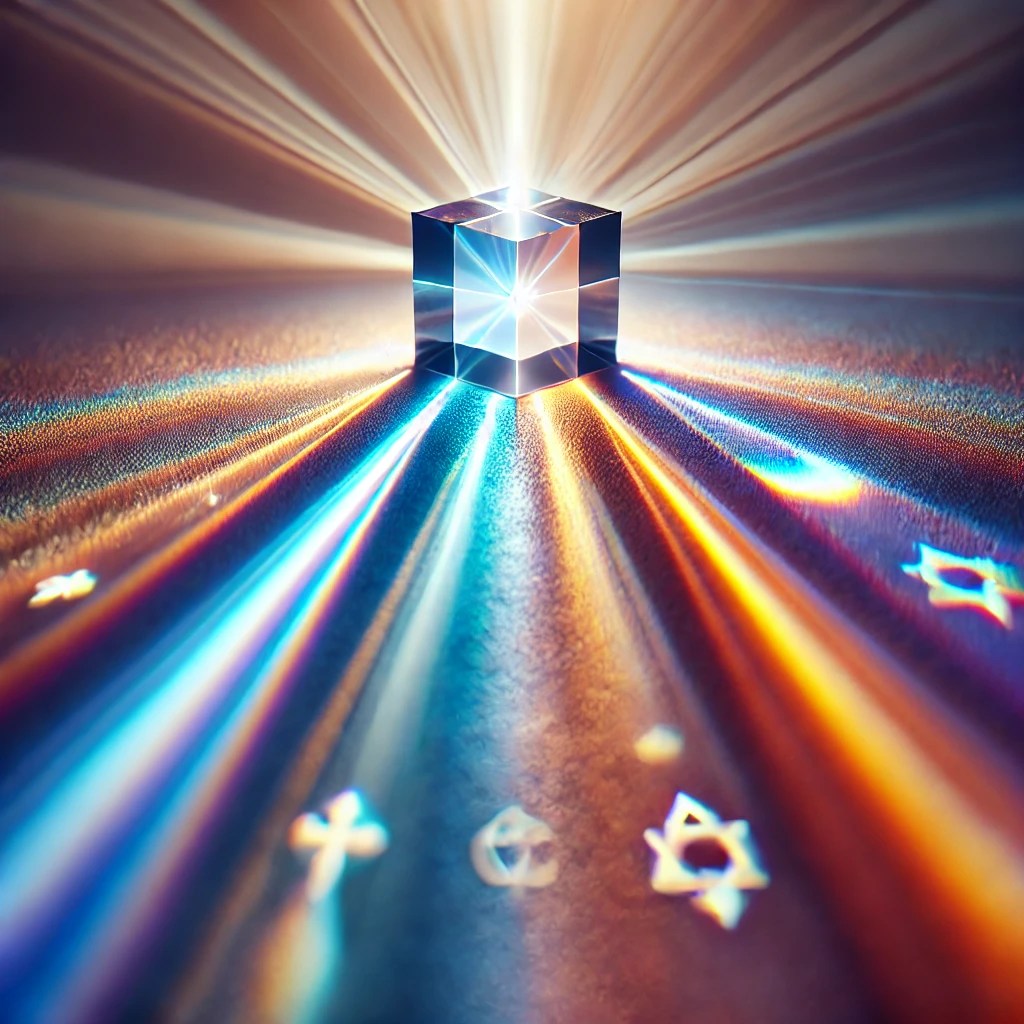
There is a famous story where several blind men touch different parts of an elephant. They all describe very different limbs, but they all speak of the same elephant. The question if all religions are true is equivalent to: are all religions touching the same elephant? If so, all religions are true, or at least part of the truth.
How do we know what religions are true? Let’s look at a tree. Since I can see the tree, we can verify any claim about the tree, just by our observations. But since we can’t see God, (see also Who or what is God?), the main problem is that we can’t verify if any religion sees a part, the whole, or no God at all.
Assume all possible statements about God are true: every single idea, generated by men, is somehow a part of the description as God in fact is. The beauty of this idea is that any contradiction among religions and philosophers is just a lack of sight, and thus lack of knowledge. This means that our knowledge of God is simply a fragment, incomplete, but true.
Another option is that God exists and is as real as a visible tree, which is not equal to another, imagined tree. This introduces the concept -as with science- of right and wrong. Since we know that the tree is green, the idea that the same tree is white is just a theory that does not hold. In this case we do know God and we can say when ideas are theories, while other ideas describe God as God really is (facts).
But what if God does not follow any of our laws of reason and logic? What if God is completely incoherent with our knowledge? We struggle to accept this idea, because everything we know has some form of coherence. With God as something without coherence with our logic, God feels like nonsense. We prefer: if God is incoherent for us, God self must be something coherent, even if it is coherent in a way that we cannot understand. Something like the coherence of chaos in the absence of order. But maybe God cannot be known at all.
Are there any more alternatives left? History gives all sorts of concrete definitions, descriptions and experiences. But all of these fit in God as either everything, God as a specific thing(s) or being(s), or God as the great unknown.
So far our route as blind men. These are our options for the God we cannot see, we cannot touch, but we can talk about. This is human life. We are stuck the God question. Thinking alone cannot bring certainty.
How about a view from the inside? How -and on what ground- speak the religions about God? Where our mind can’t help us any further, maybe the religions can. The first step is a brief overview, written in What are the religions main differences?
 Understanding religion and philosophy
Plaats een reactie