By the age of 30, most of us have encountered someone who is deeply confident in their experience of spiritual guidance. It might take many forms:
- a spiritual voice speaking directly
- emotional rest or unrest interpreted as the presence of spirits
- confirmation through others’ words or actions
- sacred texts that seem to “speak” directly to a situation
- reality unfolding in a way that affirms a path
- signs in nature interpreted as divine nudges
And so on.
But behind all of these experiences lies a striking commonality: there is often a sudden moment when an uncertain choice becomes clear. The question is—as a result of what, exactly?
What are our options here?
Skeptics may reduce it to psychology -cognitive pattern recognition, emotional projection, or subconscious decision-making. New atheists might even pathologize it, labeling such clarity as emotional instability or delusion.
And I?
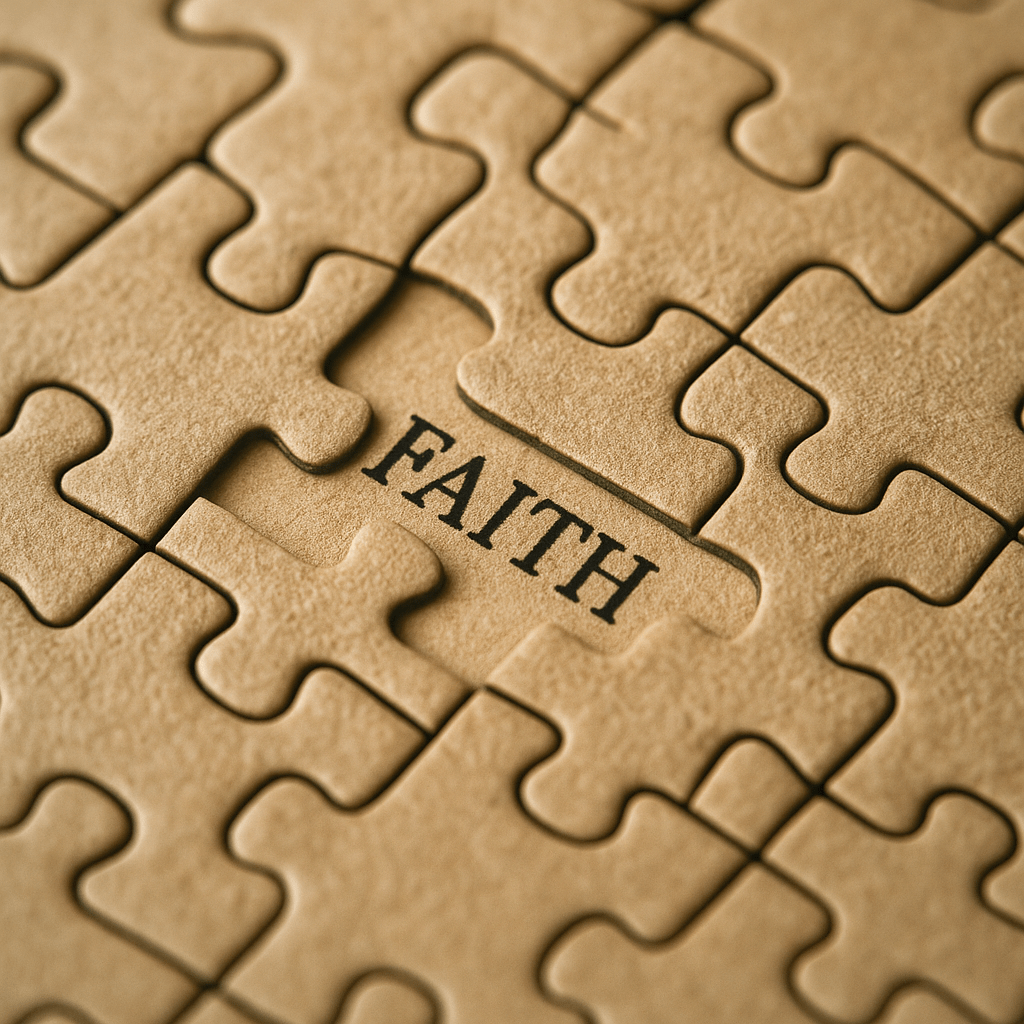
For a long time, I waited for that decisive moment—the one where everything would fall into place. Where the puzzle would complete itself, and I could finally see the full picture. But that moment never came.
Instead, I came to see that we are not given a final picture—only options. Reality and history offer us those options. Our mind is the tool we use to navigate them. But ultimately, we must choose where to harbor our faith.
I used to hate the word faith. I equated it with incapacity—something weak or irrational. Not anymore. Even thinkers like Alister McGrath and Richard Dawkins, though at opposite ends of the belief spectrum, agree on this: choices are made based on possibilities, not certainties. Their conclusions are informed by cumulative knowledge—but the truth of their choice cannot be verified.
So it is with spiritual guidance. Its riddle is grounded in our awareness of possibility. We are capable of understanding concepts like consciousness, direction, transcendence, and higher powers. When those concepts combine, a perception of spiritual guidance can emerge.
Or perhaps the concept of guidance already exists—and our ideas of mind, divinity, and direction are merely components we use to interpret it. A projection in reverse.
At this point, we must take refuge in our metaphysical framework. We must examine the cumulative knowledge we have—its strengths and limits—and make an informed decision about what we believe.
Philosophers and religious traditions offer maps. Science, however, is not yet equipped to chart the inner workings of spiritual guidance. Perhaps it will be one day. Or perhaps it never will.
Fortunately, the core possibilities are limited. Spiritual guidance is either:
- Illusory – non-existent, a product of the internal mind (psychology, imagination, or fantasy)
- Emergent – real, but grounded in material processes (naturalism, complexity, or philosophical systems)
- Transcendent – real, and originating in an external conscious mind (theism, religion)
Where one lands among these is not purely an intellectual calculation—it is also an existential decision. A step of trust.
In that sense, even our skepticism is a kind of faith—faith in the limits of what can be known, measured, or predicted.
So we live inside the riddle and our answer depends on where we choose to harbour.
 Understanding religion and philosophy
Plaats een reactie